Energy Data Solutions
Menu

Industry

Site-Level Solar & Load Forecasting Platform

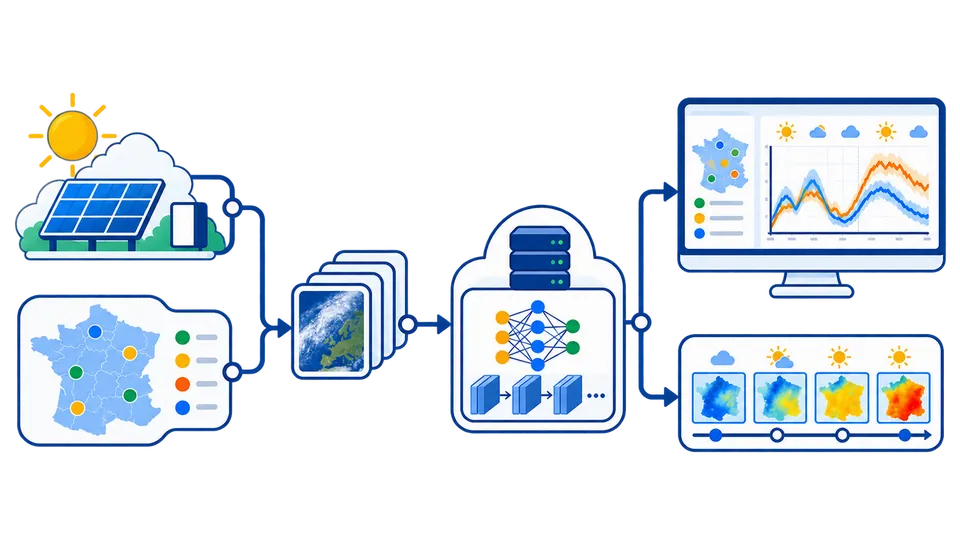
End-to-end production platform using machine learning for site-specific solar-generation and facility-load forecasts, refreshed every 15 minutes over a three-day horizon and integrated with downstream energy-management workflows.

  • 2023โ€“2024
  • PowerFlex
Site-Level Solar & Load Forecasting Platform

Our Approach

5 Project Steps

  1. Step 1 of 5

    Forecast Data Preparation

    Operational & Weather Data

    Prepared historical and incoming data used for solar-generation and facility-load forecasting, including site measurements, weather information, irradiance, and calendar features.

    The processing workflow aligns these heterogeneous time series on a consistent temporal basis and prepares them for both model training and operational inference.

    Data Quality

    Validation steps were introduced to identify incomplete, stale, or inconsistent inputs before they reached the forecasting models.

    The same preparation logic was used across site-specific forecasting problems, providing a consistent input layer for training, backtesting, and forecast generation.

  2. Step 2 of 5

    Forecast Delivery & Integration

    Site-Level Forecasts

    The platform produces separate forecasts for solar generation and facility load, with models configured for individual sites and measurement types.

    Forecasts are refreshed every 15 minutes and cover a three-day horizon at the same temporal resolution.

    Energy-Management Integration

    Forecast outputs are made available to downstream energy-management workflows, where expected generation and consumption can be incorporated into the operation of distributed energy resources.

    The forecasting layer was designed as part of a wider operational system rather than as a standalone modeling experiment.

    Skills Applied

  3. Step 3 of 5

    Forecast Modeling & Backtesting

    Site-Specific Models

    Developed forecasting models separately for each site and forecast target, allowing the model to adapt to local solar-production and facility-load patterns.

    The modeling framework included gradient-boosted models, linear models, and simple statistical baselines.

    Backtesting

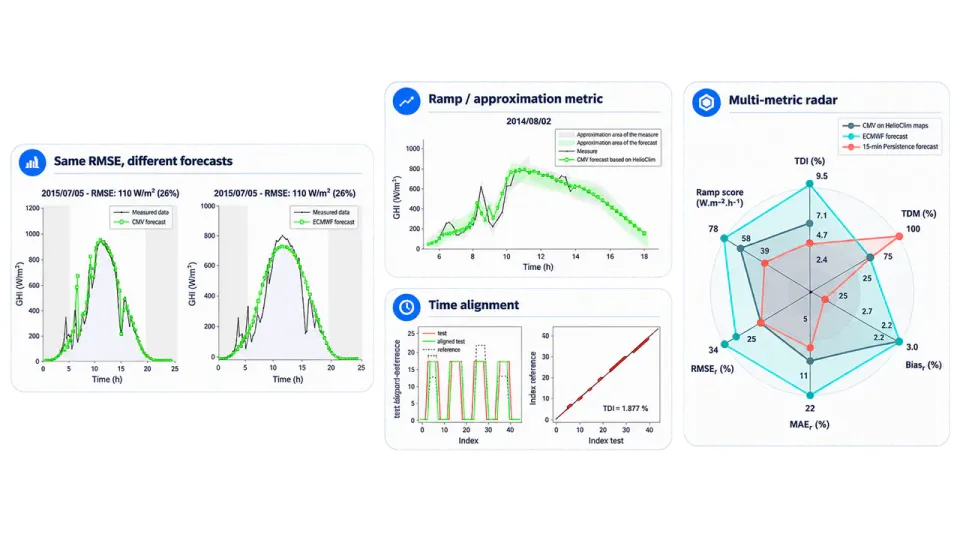
    Candidate models were evaluated on historical periods before deployment, with forecast performance compared across sites and forecast horizons using standard error metrics.

    This provided a reproducible way to select an appropriate model for each forecasting problem rather than applying a single model architecture everywhere.

    Model Updates

    Models could be retrained as additional operational data became available or site behavior changed, while retaining the same forecasting and evaluation workflow.

  4. Step 4 of 5

    Forecast Monitoring

    Forecast Quality

    Developed monitoring tools to compare forecasts with measured solar generation and facility load across sites and forecast horizons.

    The monitoring workflow made it possible to review forecast errors over time and identify changes in model performance.

    Operational Monitoring

    Input-data health and forecast execution were monitored alongside model accuracy, helping distinguish forecasting errors from missing, stale, or otherwise problematic upstream data.

    Interactive visualizations supported detailed inspection of individual sites as well as comparison across the forecasting portfolio.

    Skills Applied

  5. Step 5 of 5

    Deployment & Model Operations

    Configuration-Driven Operation

    Site and model configurations were separated from the core forecasting logic so that the same platform could support different solar-generation and facility-load forecasting problems.

    This approach reduced site-specific implementation work while keeping individual forecasting configurations independently manageable.

    End-to-End Ownership

    The work covered model development through operational deployment, including configuration, forecast generation, monitoring, model updates, and integration with the surrounding energy-management platform.

    The platform was used for operational forecasting rather than being limited to offline research or experimentation.

    Skills Applied

Data Engineering & Analytics Modernization
Industry2024PowerFlex

Data Engineering & Analytics Modernization

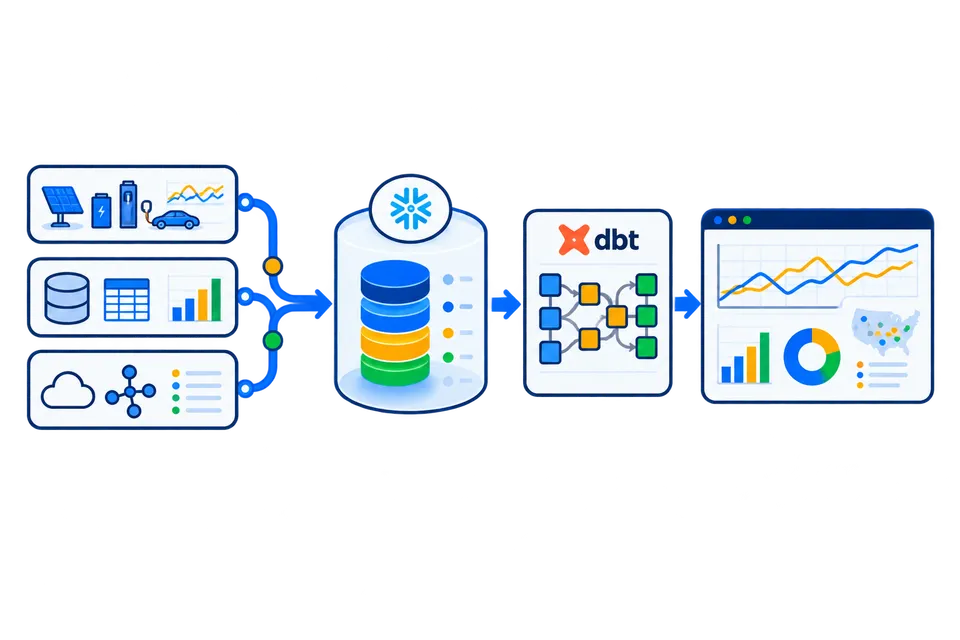
End-to-end development and modernization of a data platform spanning production ingestion, analytics engineering, quality controls, and reporting for operational, business, and customer-facing use cases.

View Project